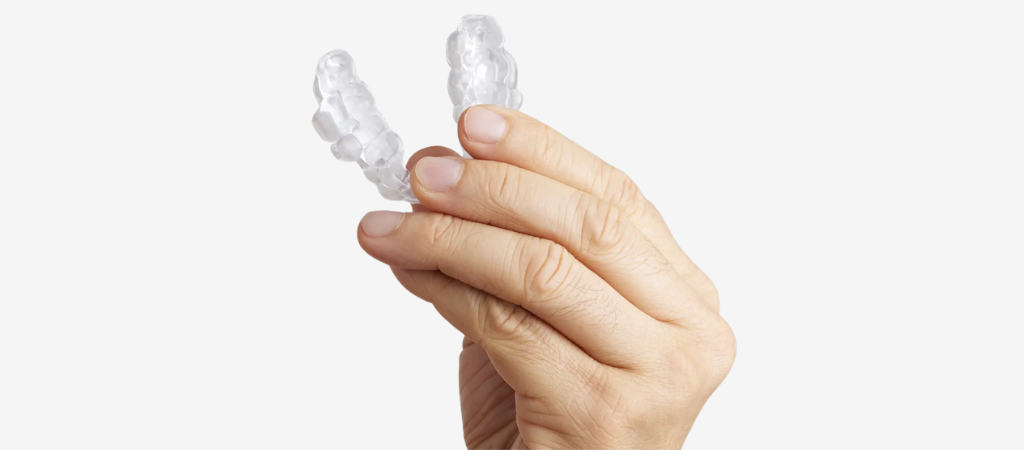
An oral appliance is a custom-made device worn in your mouth while you sleep, similar to a sports mouthguard or orthodontic retainer. It’s designed to keep your airway open by gently repositioning your jaw.
These devices are most commonly used to treat mild to moderate obstructive sleep apnea (OSA), as well as snoring.
Read more about Oral Appliance Therapy.
How Oral Appliances Work
The most common type of oral appliance is called a mandibular advancement device (MAD). It works by:
- Gently moving your lower jaw (mandible) forward
- Preventing your tongue from collapsing backward
- Keeping your airway open throughout the night
When your airway stays open, it reduces the number of breathing interruptions that define obstructive sleep apnea.
Why This Matters
In people with obstructive sleep apnea, the muscles in the throat relax during sleep, causing the airway to narrow or collapse. This leads to repeated pauses in breathing, often without the person realizing it.
By physically stabilizing the airway, oral appliances address the root cause.
Are Oral Appliances Effective?
Yes, for the right patient. Oral appliances are most effective for:
- Mild to moderate sleep apnea
- Patients who can’t tolerate CPAP
- People with positional sleep apnea (worse when sleeping on their back)
They may be less effective for severe cases, but can still be a viable alternative when CPAP isn’t an option.
Getting Fitted for an Oral Appliance
Unlike over-the-counter mouthguards, sleep apnea appliances must be:
- Custom-fitted to your mouth
- Prescribed by a qualified provider
- Adjusted over time for optimal results
At Resolve Sleep Health, care is coordinated at the clinic level and follows a streamlined process that begins with in-clinic obstructive sleep apnea (OSA) diagnostics and screening, followed by oral appliance therapy (OAT) prescreening conducted by phone. Digital impressions and scans are completed through a partnered dental provider, after which the appliance is fitted by a dentist. Ongoing follow-up adjustments and monitoring are provided virtually or in-clinic to ensure optimal outcomes.
What Are The Side Effects?
Most side effects are mild and temporary, including:
- Jaw discomfort
- Dry mouth or excess saliva
- Minor bite changes
These are usually resolved with proper fitting and adjustments.
While oral appliances are not a one-size-fits-all solution, the right candidate can experience meaningful improvements in sleep quality, snoring, and overall health. With proper fitting, ongoing adjustments, and guidance from a qualified provider, oral appliance therapy can be a reliable long-term option for better, more restful sleep.
Frequently Asked Questions
No, oral appliances don’t cure sleep apnea, but they effectively manage symptoms by keeping your airway open during sleep.
Most patients adjust within a few days to a couple of weeks, especially with a properly fitted device.