

Menopause brings significant changes to a woman’s sleep, from hot flashes to frequent awakenings to shifts in nighttime breathing. Many women also begin noticing new or worsening symptoms of snoring or disrupted breathing during this stage of life. These changes are common, but they can also be confusing, especially when fatigue persists regardless of how many hours are spent in bed.
Understanding how menopause, and the years leading up to it, affect sleep and breathing helps women recognize what is expected and what may benefit from further support. This article outlines symptoms, risks, and potential treatment pathways related to sleep apnea during both perimenopause and menopause.
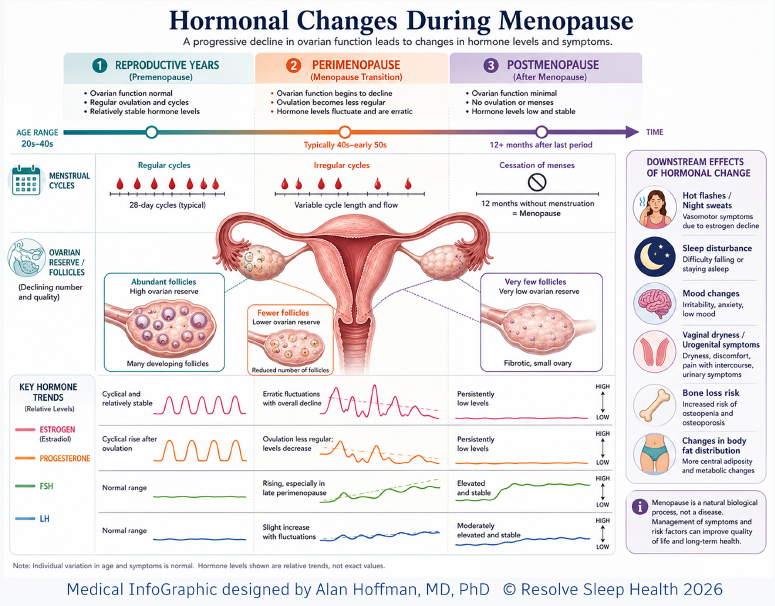
Perimenopause: When Sleep and Breathing Changes Often Begin
Many sleep‑related changes linked to menopause actually start earlier in perimenopause, when estrogen and progesterone levels begin to fluctuate. These hormonal shifts can affect sleep quality and nighttime breathing long before periods stop.
- Common changes during this stage include:
- Nighttime awakenings
- Hot flashes and night sweats
- New or increased snoring
- Greater airway sensitivity during sleep
- Persistent fatigue despite adequate sleep
Because progesterone helps maintain airway stability, fluctuating levels can make the airway more prone to collapse, contributing to snoring and early sleep‑apnea symptoms. Since perimenopause can last several years, noticing symptoms early helps women understand what’s typical and when further evaluation may be helpful.
How Menopause Impacts Sleep Quality
Hormonal Changes Influence Sleep
As estrogen and progesterone levels decline, women may experience more frequent awakenings, increased nighttime restlessness, hot flashes and night sweats, and lighter, less restorative sleep. According to the Public Health Agency of Canada, sleep disturbances are among the most commonly reported symptoms during the menopausal transition, significantly affecting overall energy and daily functioning.
Mood, Stress, and Physical Symptoms
Perimenopause and menopause can bring emotional and physical changes that affect sleep, including shifts in mood or stress levels, changes in body temperature regulation, and gradual weight changes that influence airway pressure, all of which can make sleep feel more fragmented or unpredictable.
Sleep apnea becomes more common during and after menopause. Women who never snored before may begin to snore, or they may notice new symptoms related to nighttime breathing.
Research from the Canadian Sleep Society highlights that hormonal changes during the menopausal transition can influence airway tone and breathing patterns, increasing the likelihood of sleep‑disordered breathing.
Symptoms to Watch For During Menopause
Common sleep‑apnea symptoms in perimenopausal and menopausal women include:
- Snoring
- Waking up gasping or choking
- Morning headaches
- Dry mouth
- Feeling unrefreshed despite sufficient time in bed
- Difficulty staying awake during the day
Some women also report insomnia‑like symptoms, which can overlap with sleep apnea and lead to delays in identifying the root cause.
Why Sleep Apnea Often Goes Unrecognized in Women
Sleep apnea often presents differently in women than in men, with subtler symptoms that are frequently mistaken for normal menopausal or perimenopausal changes, such as fatigue being dismissed as normal menopausal tiredness, morning headaches being attributed to stress, or insomnia symptoms overshadowing breathing‑related concerns.
According to guidance from the Canadian Women’s Health Network, women’s sleep symptoms are often under-recognized, making awareness especially important during midlife.
Health Considerations if Sleep Apnea Is Left Unaddressed
Untreated sleep apnea can contribute to long-term health challenges, especially during menopause when cardiovascular changes naturally occur. Potential risks can include:
- Increased blood pressure
- Strain on the cardiovascular system
- Excessive daytime fatigue affecting work and daily tasks
- Reduced quality of life
Identifying symptoms early helps women feel more supported and informed.
Treatment Pathways and Support Options for Women
1. Begin with a Sleep Consultation: A sleep health consultation with Resolve sleep clinician is a simple starting point to help determine whether a sleep test may be appropriate.
2. Sleep Tests: If indicated, a home sleep test can evaluate nighttime breathing, oxygen levels, and disruptions.
3. CPAP Therapy: Continuous Positive Airway Pressure (CPAP) is a common and effective treatment that supports steady breathing during sleep, helping improve energy and alertness.
4. Oral Appliance Therapy (OAT): Oral Appliance Therapy can provide comfortable alternatives for snoring and/or obstructive sleep apnea in specific cases.
5. Cognitive Behavioral Therapy for Insomnia (CBT-I): CBT‑I is a structured, evidence‑based therapy that helps improve sleep quality by addressing thoughts and behaviours that disrupt rest. It can be especially helpful for women who have difficulty falling or staying asleep, whether or not sleep apnea is also present.
Frequently Asked Questions
Yes. During perimenopause and menopause, fluctuating and declining estrogen and progesterone levels can affect airway stability, increase the likelihood of snoring, and contribute to changes in nighttime breathing patterns. Many women notice symptoms beginning in perimenopause, even before their periods stop.
Symptoms may include snoring, gasping during sleep, morning headaches, daytime sleepiness, and waking feeling unrefreshed.
Women frequently experience subtler or different symptom patterns than men. Instead of loud snoring, they may report insomnia‑like symptoms, fatigue, mood changes, or unrefreshing sleep—signs that are often attributed solely to perimenopause or menopause. As a result, sleep apnea in women is commonly under‑recognized.
Women can start with a sleep screener. If indicated, a sleep test may follow. Depending on results, treatment pathways may include CPAP therapy, Oral Appliance Therapy, or Cognitive Behavioral Therapy for Insomnia (CBT-I).