Fall has a way of filling the calendar. Work picks up, the kids are back in school, and the easy pace of summer gives way to early mornings and long to-do lists. For many people, that rising pressure shows up as stress-related sleep problems: tossing, turning, waking during the night, or lying awake with a mind that will not switch off.
Sleep and stress feed each other. A stressful day can make it harder to fall asleep, and a poor night can leave you less able to cope the next day. When the season gets busier, sleep is often the first thing we trade away, yet it is one of the resources we can least afford to lose. The good news is that a few steady sleep habits can help calm stress at bedtime and support better rest, even in a demanding stretch.
How stress steals your sleep
When you are under pressure, your body stays in a heightened, alert state that is the opposite of what sleep needs. Stress hormones keep your heart rate up and your thoughts moving, which is useful when you are meeting a deadline and unhelpful when you are trying to drift off. That is why you can feel exhausted all day and then wide awake the moment your head hits the pillow.
A racing mind at bedtime is one of the most common signs that daytime stress is following you to bed. You replay the day, rehearse tomorrow, and the harder you try to sleep, the more alert you feel. Over a busy season, these restless nights can start to feel normal, which makes it easy to dismiss them as part of a hectic stretch rather than something you can actually change.
The relationship runs in both directions. Short or broken sleep makes the next day’s stress harder to manage, so a single tense week can turn into a cycle of poor nights and difficult days. Light is also part of the picture. Your body clock relies on regular signals to know when to wind down, and a packed, irregular schedule can blur those cues. Understanding the loop is the first step to breaking it.
Why rest matters more when you are busy
It can feel productive to borrow an hour from sleep to get ahead, but the trade rarely pays off. Sleep supports focus, memory, mood, and the kind of steady decision-making a busy season demands. When you are short on rest, tasks take longer, small problems feel larger, and patience wears thin.
Seen that way, protecting sleep is not time taken away from a busy fall. It is part of how you keep performing well through it. A rested brain solves problems faster, handles setbacks more calmly, and recovers more easily from a hard day, which is exactly what a packed calendar asks of you.
Simple ways to protect sleep in a busy season
You do not need to overhaul your life to sleep better this fall. Start with one or two simple sleep habits you can repeat most days, then build from there. A realistic routine is more likely to last than a perfect one you cannot keep.
- Keep a consistent wake time, even on weekends, to steady your body clock. A regular wake time is one of the strongest anchors for healthy sleep.
- Give yourself a wind-down hour with dim lights and screens put away. A predictable signal that the day is ending helps your mind downshift.
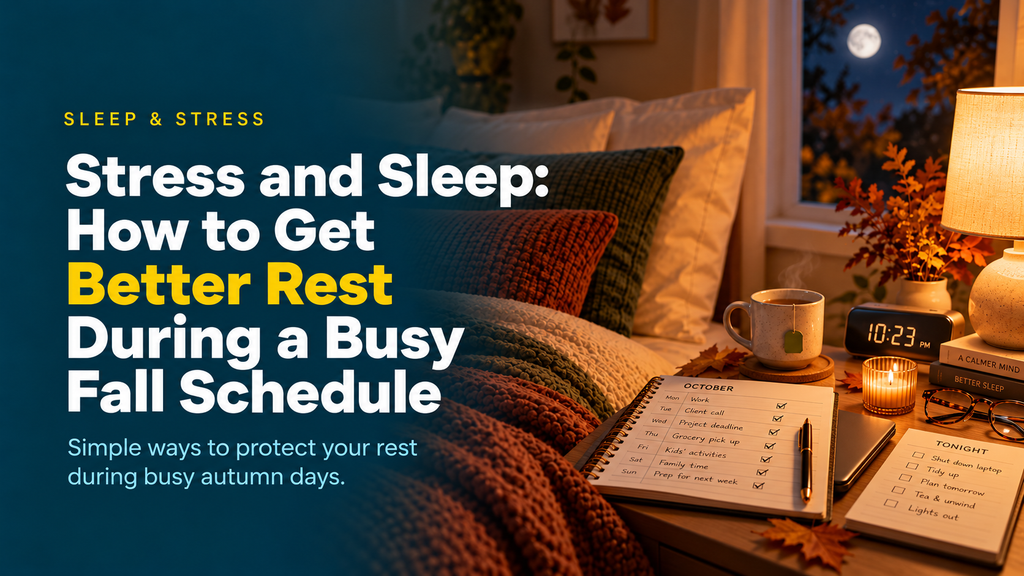
- Try a short worry list before bed. Writing down what is on your mind, with one small next step for each item, can help you set the day down rather than rehearse it in the dark.
- Move your last coffee earlier and keep alcohol modest. Caffeine can linger for hours, and while a drink may feel relaxing, both can fragment the sleep that follows.
- Get some daylight and movement during the day to burn off tension and reinforce your body clock. Morning light and regular activity both help you feel sleepier at the right time.
Choose one or two of these to start. Once they feel routine, add another. Consistency matters more than perfection, especially when the rest of your schedule is anything but predictable.
Building a wind-down that actually works
The hour before bed sets up the night. Bright lighting, work email, and stimulating content all tell your brain to stay engaged, which is the opposite of what you want. A simple, repeatable routine does the reverse: it signals that the day is over.
Keep it realistic. Dim the lights, put devices out of reach, and choose something calm such as reading, stretching, a warm shower, or preparing for the next morning so there is less to think about in bed. The goal is not a long, elaborate ritual. It is a sustainable, familiar sequence your body learns to read as a cue for sleep.
If your schedule varies from night to night, keep the sequence the same even when the timing shifts. Your body responds to the pattern of the routine more than the exact hour on the clock, so the same handful of steps can still work on the nights you get to bed later than you planned.
When it becomes more than a busy week
Some restless nights during a stressful stretch are normal. But if falling asleep, staying asleep, or waking too early has become the norm rather than the exception, it may be time for more support. Ongoing insomnia symptoms can affect mood, focus, energy, and overall health, especially when stress is part of the cycle.
Cognitive Behavioral Therapy for Insomnia (CBT-I) is the gold-standard, non-medication treatment for chronic insomnia. Rather than masking the problem, it helps retrain the thoughts and habits that keep sleep out of reach, targeting the root causes so you can build healthier sleep patterns and a calmer relationship with rest. For many people it leads to lasting improvement without relying on medication, and it is designed to fit the realities of a busy life.
Stress is not the only thing that can disrupt sleep. If you notice loud or frequent snoring, repeated awakenings, morning headaches, or daytime exhaustion that does not lift with better habits, obstructive sleep apnea may be part of the picture. Persistent sleep problems deserve a closer look rather than another rough week.
Not sure where to start? The Resolve Solution Finder can help you understand what may be affecting your sleep and point you toward the right solution, whether that is a simple routine change or a conversation with a sleep professional.
Frequently Asked Questions
Stress can make it hard to sleep because it keeps your body and mind in an alert state. That can lead to racing thoughts, a faster heart rate, and difficulty winding down even when you feel tired. A consistent wind-down routine and a steady wake time can help calm that response over time.
A short wind-down routine, dim lights, screens put away, and writing down tomorrow’s worries can all help. Moving the worry list earlier in the evening often works better than reaching for it once you are already in bed. If a racing mind continues most nights, CBT-I is an effective next step.
Most adults need roughly seven to nine hours, and a demanding stretch does not change that. Cutting sleep to create time often backfires, because the lost rest makes the next day harder and slower.
If poor sleep has lasted more than a few weeks, is affecting your mood, focus, or health, or comes with signs such as loud snoring or daytime exhaustion, it is worth speaking with a professional. Ongoing insomnia and sleep apnea are both common and treatable.